This comprehensive guide walks you through every aspect of home EV charger installation in Richmond. You’ll discover how to select the perfect charger type for your driving habits, understand the electrical requirements for your specific home, navigate Richmond’s permitting process, and find experienced local installers. The guide also covers ongoing maintenance needs, troubleshooting common issues, available incentives, and cost breakdowns to help you budget effectively.
Richmond homeowners are making the switch to electric vehicles in record numbers. Home EV charger installation offers unmatched convenience, imagine never visiting gas stations again.
Installing an EV charger at home requires hiring a licensed electrician to assess your electrical system, obtain permits, and complete the installation safely. Most homeowners choose Level 2 chargers for faster charging speeds.
Install your home EV charger with us, providing expert EV charger installation throughout Richmond with same-day assessments.
Understanding EV Charging Basics
What is an EV Charger?
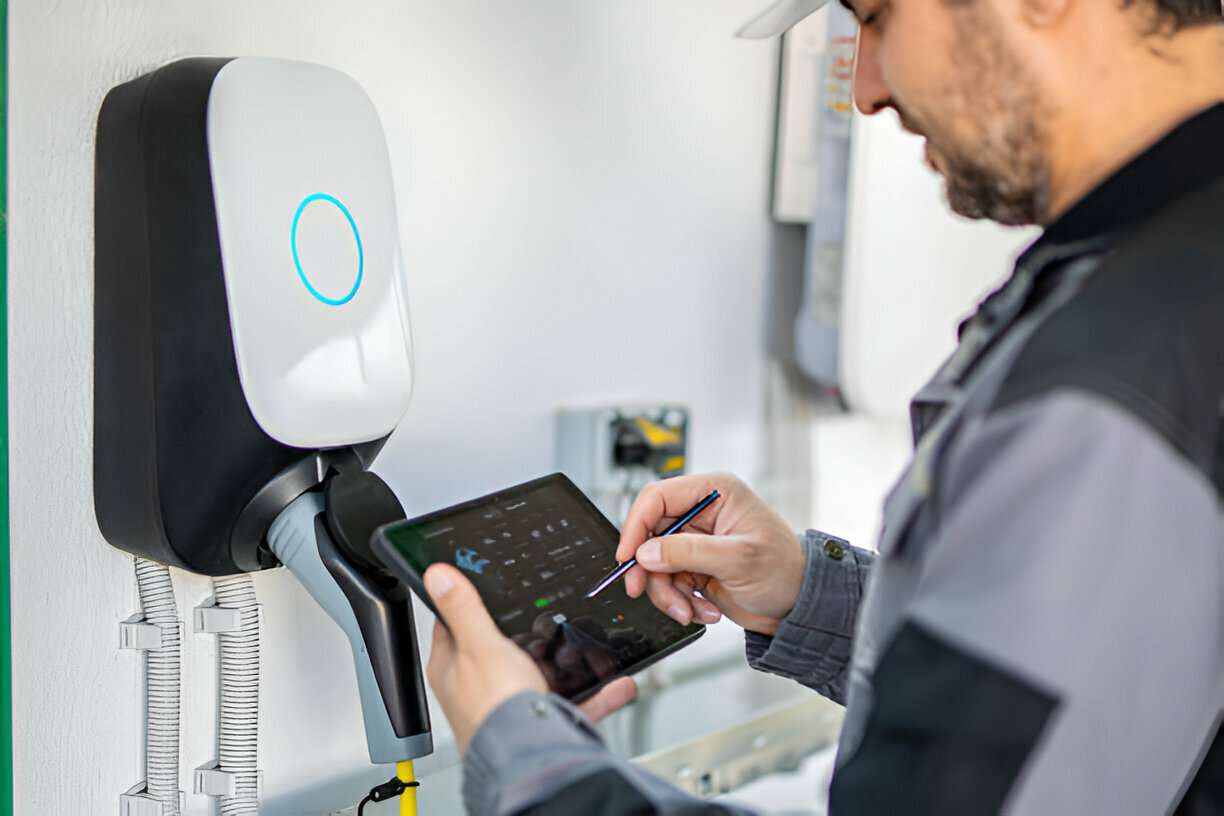
An EV charger is a device that supplies electrical power to recharge your electric vehicle’s battery. It converts AC power from your home’s electrical system into the DC power your car’s battery needs.
Think of it like a giant car charger. The charger connects to your home’s electrical panel and delivers power through a charging cable to your vehicle’s charge port.
Fact: Level 2 chargers can charge electric vehicles up to 10x quicker than Level 1 charging, meaning most EVs can gain full overnight charging capability in just 6-8 hours.
Types of Chargers: Level 1 vs. Level 2
Level 1 chargers plug into standard 120V outlets and add 3-5 miles of range per hour. Level 2 chargers require 240V outlets and add 25-40 miles of range per hour.
For home installation, most Richmond homeowners choose Level 2 chargers because they charge significantly faster than Level 1. Level 1 works if you drive less than 40 miles daily and have time for slow charging.
Benefits of Installing a Home EV Charger
Home EV chargers provide convenience, cost savings, and faster charging compared to public stations. You’ll save time and money while increasing your home’s value.
Key benefits include:
- Charge overnight while you sleep
- Home electricity costs less than public charging
- No waiting in lines or driving to charging stations
- Increases property value
- Always available when you need it
Types of Home EV Chargers
Level 1 vs. Level 2 Chargers
Level 2 chargers are recommended for most Richmond homeowners because they provide practical charging speeds for daily use. Level 1 chargers work only for minimal daily driving.
Charging Speed Comparison:
- Level 1: 3-5 miles per hour (120V)
- Level 2: 25-40 miles per hour (240V)
Power Requirements:
- Level 1: Uses existing 120V outlet
- Level 2: Requires 240V circuit installation
Choose Level 2 if you drive more than 40 miles daily or want overnight charging capability. Level 1 works for apartment dwellers or very light daily driving.
Smart Chargers and Features
Smart EV chargers connect to WIFI and offer remote monitoring, scheduling, and energy management features through smartphone apps. They’re worth the extra cost for most homeowners.
Popular Smart Features:
- Schedule charging during off-peak hours
- Monitor energy usage and costs
- Receive charging notifications
- Load balancing to prevent electrical overload
- Integration with solar panels
Smart chargers cost more upfront but can save money through optimized charging schedules and energy monitoring.
Choose the right charger with Above The Code Electrical in Richmond.
Schedule Your Consultation
Preparing for Installation
Assessing Your Home’s Electrical Capacity
A licensed electrician must evaluate your electrical panel’s capacity and available circuits. Most homes need 40-60 amp circuits for Level 2 chargers, which may require panel upgrades.
Panel Assessment Includes:
- Current electrical load calculation
- Available breaker space
- Wire gauge and circuit capacity
- Distance from panel to installation location
Homes built before 1990 often need electrical panel upgrades. Your electrician will determine if your service can handle the additional load.
Choosing the Right Location
Install your EV charger in a garage or covered area within 25 feet of your electrical panel. Consider your vehicle’s charge port location and daily parking habits.
Best Installation Locations:
- Attached garage (most common)
- Carport or covered parking
- Driveway with weather protection
- Near the electrical panel to reduce wiring costs
Location Factors:
- Distance from the electrical panel affects cost
- Weather protection extends charger life
- The vehicle’s charge port side determines the mounting
- Local HOA or permit requirements
Permits and Local Code Requirements
Richmond requires electrical permits for EV charger installation. Your electrician will obtain permits and schedule required inspections to ensure code compliance.
Richmond Permit Process:
- Electrical permit application
- Load calculation submission
- Installation inspection
- Final approval and activation
Permit costs range from $50-$150 in Richmond. Professional electricians handle all permit paperwork and coordinate inspections for you.
Installing without permits can void insurance coverage and create safety hazards. An academic study found that only72.5% of 657 public fast chargers worked in the San Francisco Bay area, highlighting the importance of professional installation and maintenance. Always use licensed electricians who pull proper permits.
Step-by-Step Installation Process
1. Site & Load Assessment
A licensed electrician visits your home to evaluate electrical capacity, determine optimal charger placement, and identify any necessary upgrades before installation begins.
The assessment includes electrical panel inspection and load calculation, measuring distance to installation location, checking for adequate circuit capacity, and evaluating internet connectivity for smart chargers.
This visit typically takes 30-60 minutes and provides accurate installation quotes.
2. Selecting the Right Equipment
Choose a reputable brand with the correct connector type for your vehicle, appropriate amperage for your electrical system, and features matching your needs and budget.
Equipment Selection Factors:
- Connector type (J1772 for most EVs, Tesla connector for Tesla)
- Amperage rating (32, 40, or 48 amps, most common)
- Hardwired vs. plug-in installation
- Smart features and WIFI connectivity
- Weather rating for outdoor installation
Popular brands include ChargePoint, JuiceBox, Grizzl-E, and Tesla Wall Connector.
3. Installation Steps
Professional installation includes power shutoff, mounting the charger, running new wiring from the electrical panel, connecting circuits, and testing the complete system.
Installation Process:
- Turn off the main electrical power
- Mount the charger bracket to the wall or post
- Run conduit and wiring from the panel to the charger
- Install a new circuit breaker in the electrical panel
- Connect the wiring to the charger and breaker
- Test all connections and safety systems
Installation typically takes 3-6 hours, depending on distance and complexity.
4. Testing and Commissioning
Electricians perform comprehensive system testing, including electrical safety checks, voltage verification, and test charging with your vehicle to ensure proper operation.
Testing Procedures:
- Voltage and amperage verification
- Ground fault circuit testing
- Initial vehicle charging test
- Smart feature setup and connectivity
- Safety system verification
Your electrician will demonstrate proper operation and explain any smart features or maintenance requirements.
5. Training and Handover
Professional installers provide complete operation training, maintenance guidelines, troubleshooting tips, and warranty information to ensure safe, efficient charger use.
Training covers daily operation and safety procedures, smart app setup and features, basic troubleshooting steps, maintenance requirements, warranty coverage, and contact information.
Book Your Installation Today
Costs and Incentives
Typical Installation Costs in Richmond, VA
EV charger installation in Richmond typically costs $800-$2,500 for standard installations. Costs increase with electrical panel upgrades, longer wire runs, or complex installations.
Cost Breakdown:
- Level 2 charger: $400-$1,200
- Basic installation labor: $400-$800
- Permits and inspection: $50-$150
- Electrical panel upgrade (if needed): $1,500-$3,000
- Additional wiring/conduit: $5-$10 per foot
Get multiple quotes from licensed electricians to compare pricing and services.
Available Rebates and Incentives
Federal tax credits up to $1,000 are available for EV charger installation. Dominion Energy offers residential charging programs, and Virginia may provide additional state incentives.
Current Incentives:
- Federal tax credit: Up to $1,000 (partial cost coverage)
- Dominion Energy: Residential charging programs
- Virginia Clean Cities: Occasional rebate programs
- Local utility programs: Check with your provider
Consult your tax professional about claiming federal credits and check Dominion Energy’s current programs.
Maintenance and Troubleshooting
Routine Maintenance Tips
EV chargers require minimal maintenance, mainly visual inspections, keeping the unit clean, and updating smart charger firmware when available.
Monthly Maintenance:
- Inspect the charging cable for damage
- Clean the charger housing and connector
- Check the mounting hardware’s tightness
- Test the charging function
Annual Maintenance:
- Professional electrical connection inspection
- Firmware updates for smart chargers
- Weather seal inspection for outdoor units
Proper maintenance extends the life of the charger and ensures safe operation.
Common Issues and Solutions
Common issues include slow charging speeds, circuit breaker trips, and connectivity problems with smart chargers. Most problems require professional diagnosis and repair.
Common Problems:
- Slow charging: Check vehicle settings and charger amperage
- Breaker trips: Indicates electrical overload or fault
- No power: Check the breaker and electrical connections
- Smart features not working: Reset the WIFI connection
- Error codes: Consult the user manual or call support
Always contact qualified electricians for electrical issues or safety concerns.
Why Hire a Professional Electrician?
Safety and Compliance
EV charger installation involves high-voltage electrical work that requires licensed electricians for safety and code compliance. DIY installation risks electrocution, fires, and insurance issues.
Professional Installation Benefits:
- Ensures electrical code compliance
- Provides warranty coverage
- Handles the permit and inspection process
- Prevents safety hazards
- Maintains insurance coverage
Reality Check: Insurance companies may deny claims for electrical fires caused by unpermitted DIY electrical work. Studies show that more than half of new vehicle-buyers in the US park their vehicle within 25 ft. of a Level 1 charging opportunity, while just under one-third have access to Level 2 charging.
Choosing an Installer in Richmond, VA
Choose licensed electricians with EV charger installation experience, proper insurance, good local reviews, and comprehensive warranties on their work.
Questions to Ask Installers:
- Are you licensed and insured in Virginia?
- How many EV chargers have you installed?
- Do you handle permits and inspections?
- What warranty do you provide?
- Can you provide local references?
Get multiple quotes and verify licenses through Virginia’s contractor licensing board.
Takeaway
Installing a home EV charger transforms your electric vehicle ownership experience. You’ll enjoy convenient overnight charging, cost savings, and increased home value while supporting sustainable transportation.
Professional installation ensures safety, code compliance, and optimal performance. With available federal tax credits and local incentives, there’s never been a better time to install your home EV charger.
Power Up Your Home with Above The Code Electrical
Above The Code Electrical brings decades of electrical expertise directly to your driveway. We handle everything from initial assessment to final testing, including all permits and inspections.
Don’t let another day pass without visiting gas stations. Your EV deserves the convenience of home charging, and your family deserves the peace of mind that comes with professional installation.
Get In Touch
Frequently Asked Questions
How long does installation take?
EV charger installation typically takes 3-6 hours for standard installations. Complex jobs requiring panel upgrades or long wire runs may take 1-2 days to complete properly.
Can I use my existing outlet?
Most existing outlets cannot handle Level 2 EV chargers, which require dedicated 240V circuits. Your electrician will install new wiring and outlets specifically for your charger.
What if I need to upgrade my electrical panel?
Panel upgrades add significant cost to installation, but are necessary if your current panel lacks capacity. Your electrician will determine upgrade requirements during the assessment.
How do I maintain my charger?
EV chargers need minimal maintenance – monthly visual inspections, cleaning, and annual professional electrical checks. Smart chargers may need occasional firmware updates through their apps.
How much does it cost to install a home EV charger in Richmond, VA?
The cost to install a home EV charger in Richmond typically ranges from $500 to $6,500, depending on your home’s wiring, electrical panel capacity, and the distance from the panel to the charger location.
Do I need a permit or approval to install an EV charger at home in Richmond?
Yes, you generally need a permit for electrical work, and if you live in an HOA, you may also need approval from your homeowners association before installing an EV charger.
What type of EV charger should I install at home?
Most homeowners choose a Level 2 charger for faster charging speeds and greater convenience, but the best option depends on your driving habits and your home’s electrical capacity.
Can any electrician install an EV charger, or do I need a specialist?
Any licensed electrician can install an EV charger, but it’s recommended to hire someone experienced with EV charger installations for safety and code compliance.
Are there any rebates or incentives for installing a home EV charger in Richmond, VA?
Dominion Energy offers a residential charger program with fixed monthly payments and ongoing maintenance, and there may be federal tax credits or local incentives available to help offset installation costs.
What challenges might I face installing an EV charger if I live in a condo or HOA community?
You may encounter delays or restrictions from your HOA, such as lengthy approval processes, additional installation requirements, or outright denials, so it’s important to review your community’s policies and be prepared to appeal decisions if necessary.